




Models, Trims & Features
Use model and trim guides to understand what changes across the lineup, which equipment affects daily use, and whether moving up makes sense. The highest trim is not automatically the right trim.
Delta Chevrolet Research Hub
The right Chevrolet starts with the right questions. This research hub helps shoppers understand model differences, trim choices, capability, cargo needs, technology, electric-vehicle ownership, and what new information means in daily use. Delta Chevrolet connects that guidance to real East Contra Costa driving—commuting, family schedules, work, towing, and recreation. Use the article feed to answer one decision at a time, build a shortlist, and identify the details to verify on a specific vehicle.
Read the Latest Research
Once the articles narrow your priorities, Delta Chevrolet can help match them to current inventory, confirm equipment, compare EV options, plan a trade, and review financing. The goal is to arrive at the test drive knowing which differences you need to feel or see for yourself.
The feed covers different stages of the decision. Choose the kind of question you need answered instead of trying to read every article at once.
Use model and trim guides to understand what changes across the lineup, which equipment affects daily use, and whether moving up makes sense. The highest trim is not automatically the right trim.
Capability research explains the numbers behind truck configurations, passenger space, bed sizes, and cargo flexibility. Maximum ratings and total cargo volume never tell the whole ownership story by themselves.
Comparison guides focus on the differences that change ownership: usable space, powertrain choice, capability, technology, price, and ease of daily use. The better vehicle depends on the job it needs to do.
Electric-vehicle, technology, maintenance, and ownership articles explain how a feature works, where limitations apply, and what changes after the test drive. Charging access and driving patterns matter as much as an EV’s headline range.
Read the latest model guides, comparisons, capability explainers, future-model updates, and ownership resources below. Each article is designed to answer a practical shopper question and show what the information changes in real use.
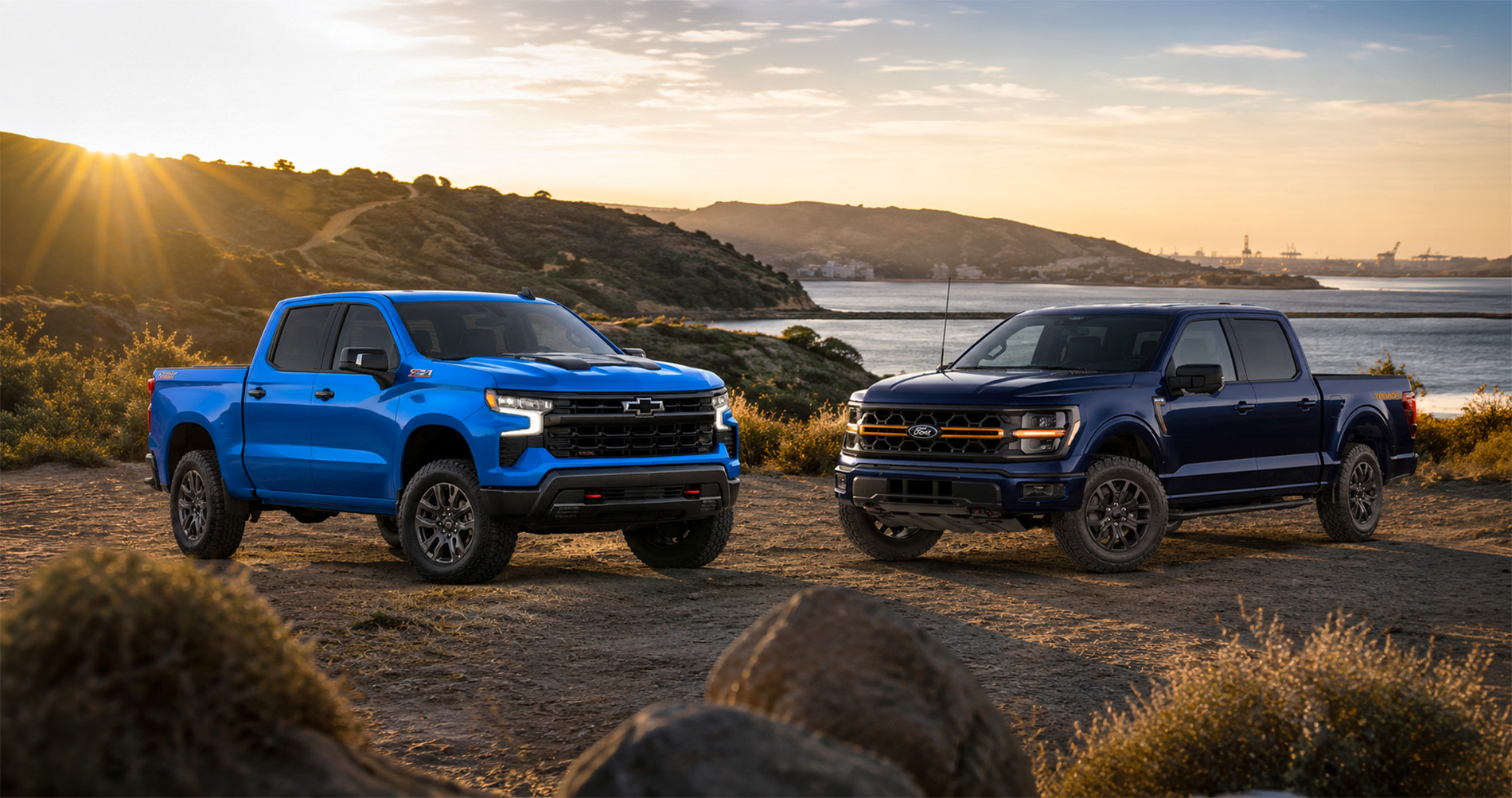
The Ford F-150 vs Chevrolet Silverado 1500 comparison is one of the most important half-ton truck decisions because both pickups are highly capable. The Silverado 1500 leans into proven Chevrolet truck strength, available V8 power, available Duramax diesel torque, practical bed utility, and trailering confidence. The F-150 counters with a broad technology and productivity story, including available PowerBoost hybrid capability, BlueCruise availability, Pro Power Onboard, Pro Access Tailgate, and Raptor performance.
This is not a one-size-fits-all comparison.
The 2026 Ford F-150 gets credit if your priorities are hybrid availability, hands-free highway driving availability, mobile-worksite utility, or Ford-specific productivity tech.
The 2026 Chevrolet Silverado 1500 is more compelling if your truck life centers on available V8 or diesel power, straightforward capability, practical trailering tools, bed utility, and a familiar Chevrolet ownership path.
For Delta Chevrolet shoppers, the better fit often comes down to how the truck will be used across East Contra Costa. A pickup that commutes on Highway 4, hauls tools during the week, handles family errands, and tows confidently near and far — from the Pittsburg Marina to longer recreation trips toward places like Courtright Reservoir — has to be more than a spec-sheet winner. It has to match your trailer, payload, engine preference, cabin needs, technology comfort level, and long-term dealership support.
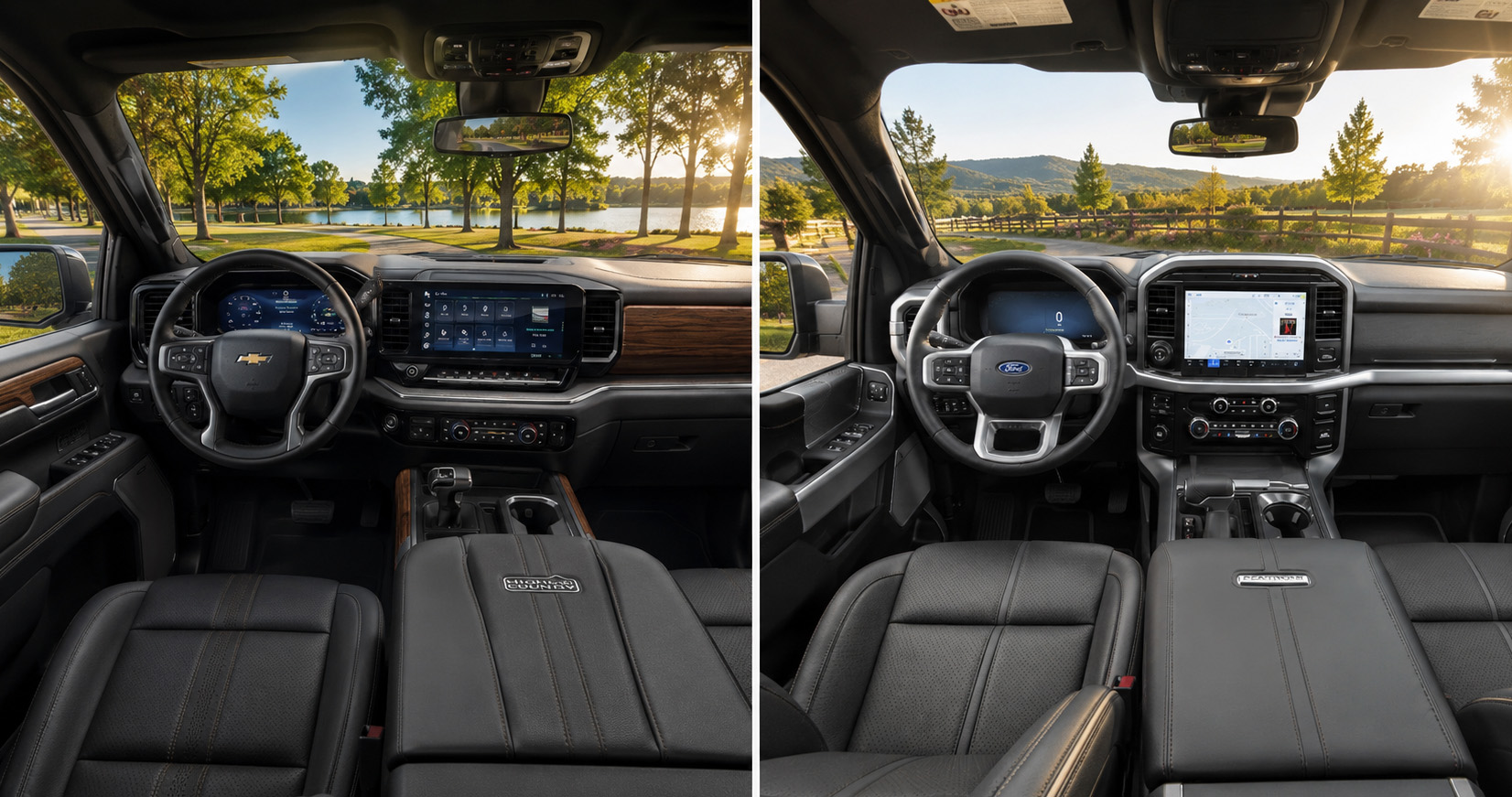
The table below focuses on the differences most likely to shape a real truck purchase: starting MSRP, powertrain availability, towing, payload, trailering tools, bed utility, and technology direction. It is not meant to replace a build sheet, window sticker, payload label, or towing guide for a specific VIN.
The F-150 has the stronger tech-and-productivity pitch. Its available PowerBoost hybrid, available onboard power, available BlueCruise, and Pro Access Tailgate give Ford a clear advantage for shoppers who want the truck to double as a mobile workspace or tech-forward daily driver.
The Silverado answers with a more traditional truck-strength argument. It keeps available V8 power in the center of the conversation, offers an available Duramax diesel engine, and adds trailering technology that can make hitching, towing, and maneuvering feel more manageable when the truck is configured correctly.
Around East Contra Costa, that distinction is useful. F-150 may appeal if your top priorities are hybrid power, mobile-worksite utility, or advanced convenience features. Silverado is the truck to start with if your week involves towing, contractor use, family errands, boat or trailer hauling, and a preference for a straightforward Chevrolet pickup.
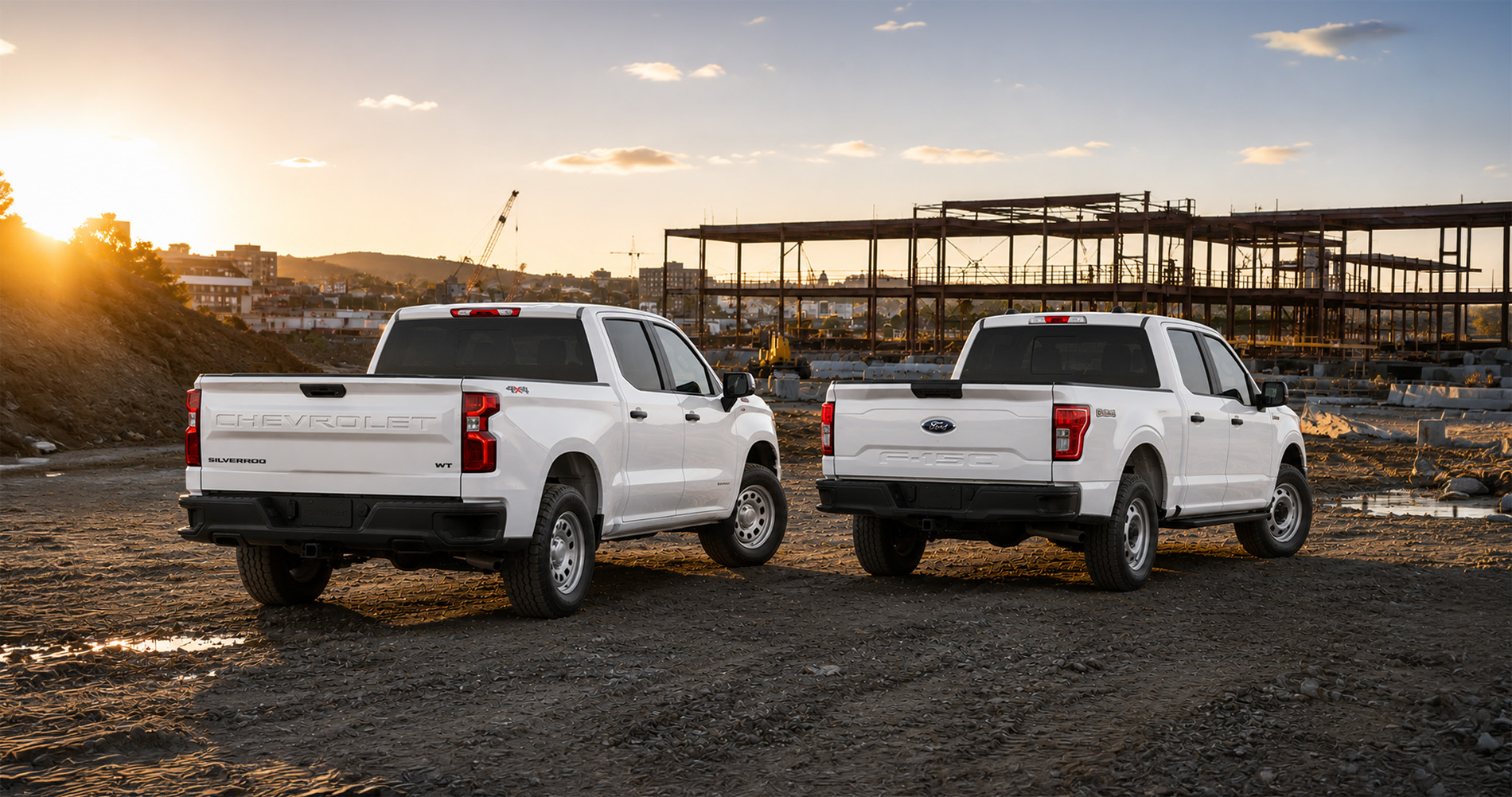
Before comparing every trailering tool and engine option, it helps to give each truck its own role. The Silverado 1500 and F-150 are close enough that a one-line winner would miss the point.
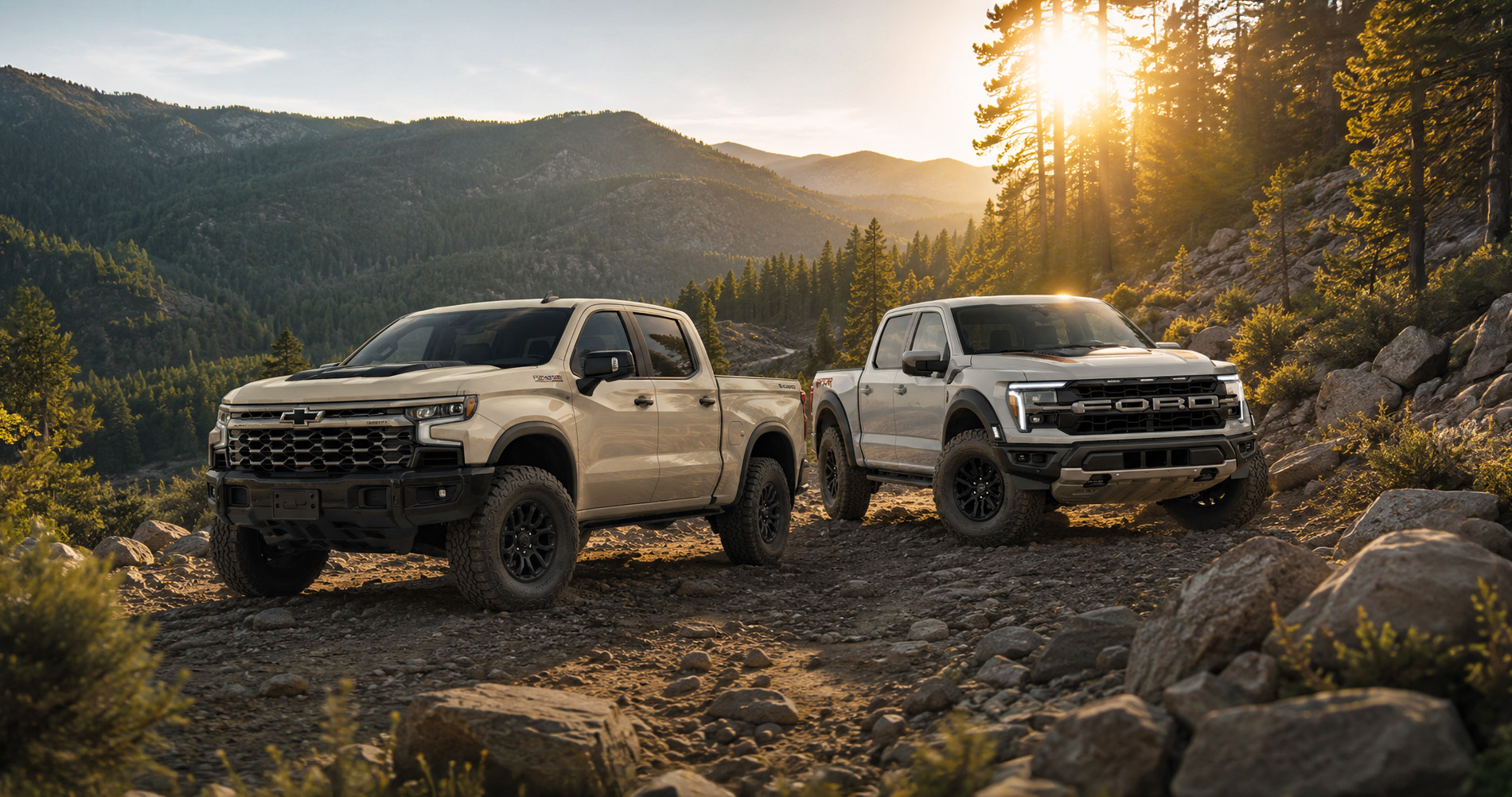
The Silverado vs F-150 decision works best when it is tied to real use. Both trucks are capable. The stronger fit depends on whether you want Silverado’s available V8/diesel power and familiar Chevrolet truck feel, or F-150’s hybrid availability, productivity tools, and tech-forward configuration options.
The best way to finish a Silverado 1500 vs F-150 comparison is to sit in the cab, review the payload label, talk through your trailer or work needs, and compare the exact trim and equipment that fit your routine.
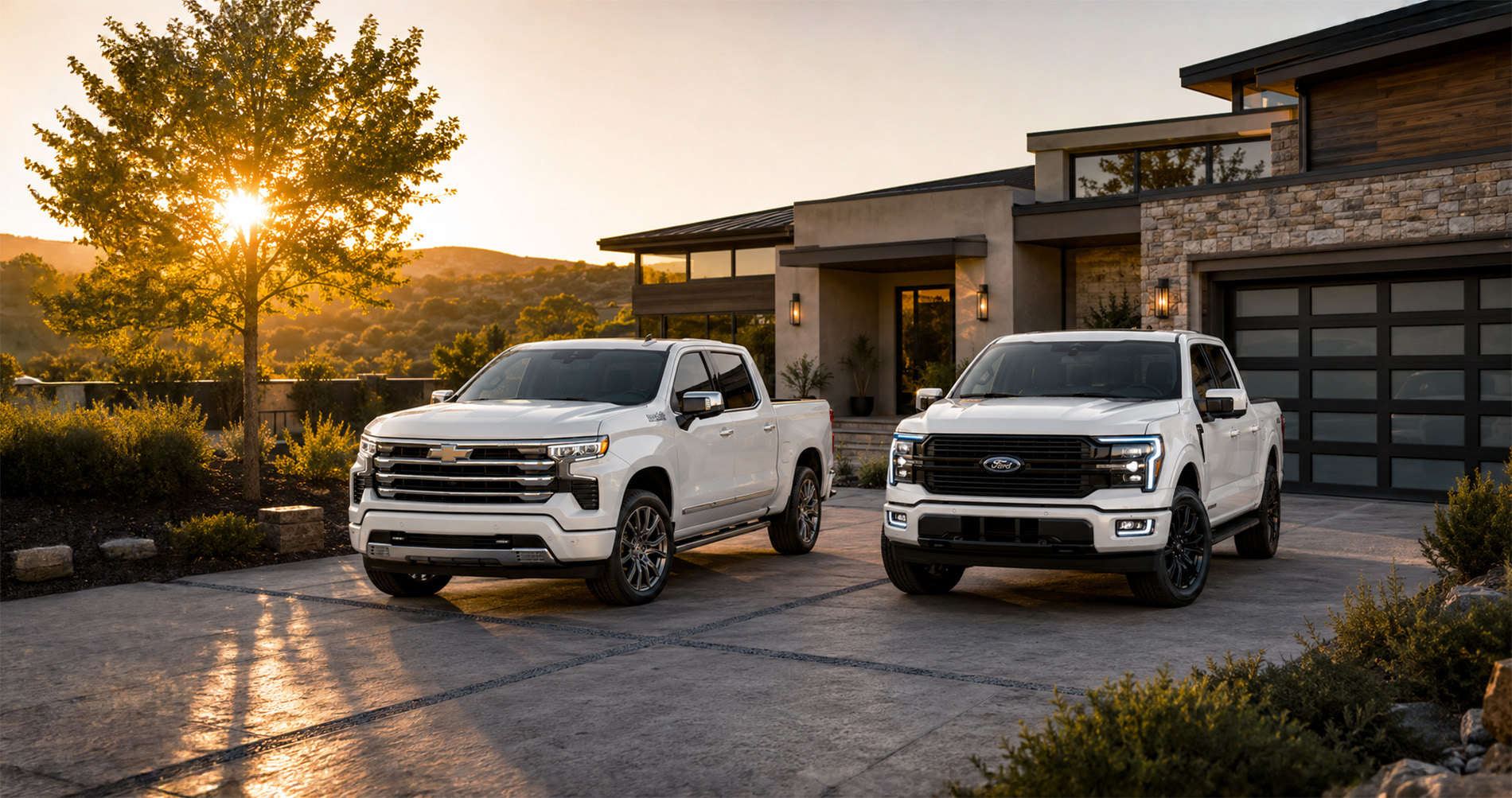
The 2026 Ford F-150 is the stronger fit if you want available PowerBoost hybrid capability, BlueCruise availability, Pro Power Onboard, Pro Access Tailgate, or Raptor performance. Those are real advantages for shoppers who want a tech-forward truck with broad configuration flexibility.
The 2026 Chevrolet Silverado 1500 is the stronger fit if you want a proven full-size truck with available V8 power, available Duramax diesel torque, practical trailering tools, strong bed utility, and a familiar Chevrolet feel. For many Delta Chevrolet shoppers, that balance makes Silverado the better first test drive.
If you are still undecided, compare the exact Silverado 1500 trim, payload label, trailering equipment, cab, bed, and powertrain that match your routine. That is where the Silverado's real-world fit becomes easier to judge than a broad spec-sheet comparison.
Delta Chevrolet is a practical East Contra Costa Chevrolet dealership serving shoppers who need trucks for real work, real towing, and real everyday use. That matters in a Silverado 1500 vs F-150 decision because the right truck depends on your actual trailer, payload, commute, jobsite needs, family use, and long-term ownership plan.
Located at 3750 Century Court in Pittsburg, Delta Chevrolet gives local shoppers a convenient place to compare Silverado 1500 trims, review available inventory, talk through trade value, and plan financing. For drivers across East Contra Costa, the Silverado's available V8 engines, available Duramax diesel, bed utility, and trailering tools are worth comparing in person instead of judging only from a spec chart.
The F-150 remains a strong competitor, especially for hybrid capability, available BlueCruise, onboard power, and Ford-specific productivity features. The Silverado is the Chevrolet to test when you want a truck that prioritizes proven powertrain variety, practical capability, towing confidence, and Delta Chevrolet support.
Use these Delta Chevrolet resources to keep comparing the Silverado 1500, review current Chevrolet inventory, estimate your trade, explore financing, or plan a visit when you are ready to compare trucks in person.
Disclaimers:
*MSRP, pricing, offers, incentives, taxes, title, license, dealer fees, destination charges, optional equipment, accessories, and availability may change without notice. Dealer sets final price.
*Vehicle availability, colors, trims, packages, powertrains, features, equipment, and model-year details vary by configuration and inventory. See Delta Chevrolet and the manufacturer for current details.
*Towing and payload ratings are maximum available figures when properly equipped. Actual ratings depend on cab, bed, drivetrain, axle ratio, engine, wheels, equipment, accessories, passengers, cargo, tongue weight, trailer setup, and other factors. Always consult the owner manual, trailering guide, and vehicle-specific labels before towing or hauling.
*EPA-estimated fuel economy, where referenced, is for specific configurations. Actual mileage will vary based on driving conditions, vehicle equipment, maintenance, terrain, payload, towing, fuel, and driving habits.
*Driver-assistance and safety features are not substitutes for safe, attentive driving. Feature operation can be limited by conditions. Review the owner manual for important limitations and details.
*BlueCruise, Super Cruise, Pro Power Onboard, Pro Access Tailgate, Multi-Flex Tailgate, trailering camera views, connected services, and other features may require specific trims, packages, subscriptions, activation, compatible roads, or equipment. Availability and functionality may change.
*Third-party reviewer comments and editorial summaries are based on outside source opinions and may change over time.
*This comparison is for general research only and does not replace reviewing the exact vehicle window sticker, build sheet, owner manual, trailering guide, or dealership inventory listing.

Local context helps only when it changes the decision. Across Contra Costa County—from the East Contra Costa County core suburban corridor to waterfront and semi-rural communities around the Sacramento–San Joaquin River Delta—these familiar trips show which vehicle roles and ownership details deserve attention before you compare individual trims.
For Highway 4 travel between Pittsburg, Antioch, and Concord, BART-linked trips toward Oakland, or cross-county days reaching Dublin, start with the smaller Chevrolet SUVs and EVs. Compare seat comfort, visibility, charging or fuel needs, and parking fit before paying for space you will rarely use.
School schedules, errands, and gear for a day at Big Break Regional Shoreline make passenger-and-cargo balance more useful than maximum seating alone. For routines around Brentwood, Oakley, and Clayton, compare second- and third-row access, cargo room with people aboard, child-seat routines, and cabin storage.
For boats, trailers, tools, and recreation gear around Discovery Bay, Tracy, and the broader Delta region, start with the loaded trailer and everything traveling in the vehicle—not the advertised maximum. Cab, bed, engine, drivetrain, payload, trailering equipment, and tongue weight can change the right truck or SUV configuration.
Hiking or picnic gear for Black Diamond Mines Regional Preserve can make cargo access, rear-seat flexibility, and durable cabin materials worth comparing. The destination itself does not automatically require AWD or an off-road trim; choose those upgrades only when the rest of your driving supports them.
Use this map to decide which type of article deserves your attention first.
| Your Question | Best Research Type | What It Helps You Decide |
|---|---|---|
| Which Chevrolet fits my daily life? | Model guides and in-brand comparisons | Vehicle size, passenger room, cargo flexibility, parking fit, and core purpose. |
| Which version should I buy? | Trim-level and package guides | Whether a value, comfort, sport-appearance, premium, work, or trail-focused role fits—and where moving up stops making sense. |
| Can it carry or tow what I need? | Towing, payload, cargo, bed, and dimension guides | The configuration and usable capacity required for passengers, gear, work, or a trailer. |
| How does it compare with another vehicle? | Model comparison articles | Which differences affect your priorities and which feature-list differences matter less. |
| Would a Chevrolet EV fit my routine? | Range, charging, EV comparison, and ownership guides | Whether charging access, mileage, trip patterns, space, and capability align with EV ownership. |
| What is changing next? | Future-model previews and confirmed-update guides | What Chevrolet has confirmed, what remains pending, and whether waiting serves your needs. |
Useful automotive guidance should do more than list specifications. Delta Chevrolet connects practical research with local experience, transparent shopping support, and help throughout ownership. The dealership is part of the Harvey Automotive Group, whose family automotive roots date to 1954, and it has longstanding ties to Pittsburg and the surrounding East Contra Costa community.
The guidance explains what a feature or specification changes, who benefits, and what tradeoffs deserve attention. Future-model coverage separates confirmed facts from details Chevrolet has not announced.
East Contra Costa references appear when commuting, family travel, work, towing, charging, or recreation changes the recommendation. Location names never replace buyer guidance.
Current inventory, transparent pricing, trade-in planning, and financing help turn research into a specific vehicle decision. Factory-trained Chevrolet technicians, diagnostics, GM parts, and service support the ownership years that follow.
Bring your shortlist to Delta Chevrolet to compare exact vehicles, test-drive the differences that matter, and plan the purchase around your trade and financing needs.
Already own a Chevrolet? Visit the Delta Chevrolet service department.